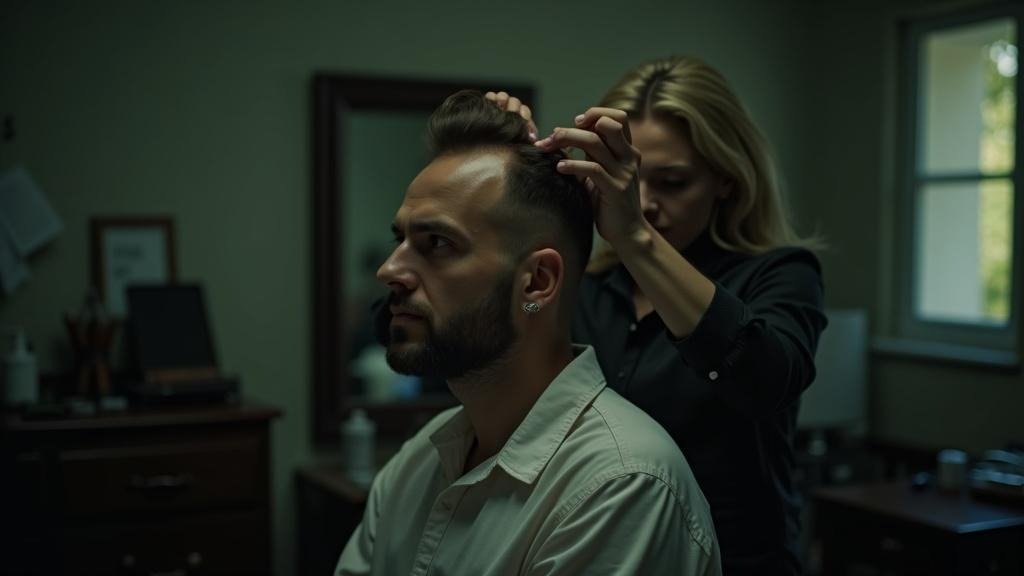
Something shifted in the last year or two. Telehealth platforms quietly started bundling finasteride and minoxidil together, topical finasteride went mainstream, and AI photo tools started giving people a real starting point before they even talked to a doctor. The conversation changed from “which one do I pick” to “who prescribes it, in what form, and do I actually know my stage yet.” This piece covers all of it.
The Full Comparison Table
| # | Option / Angle | Type | Rx Needed | Monthly Cost Est. | Form Available | Best For |
| 1 | HairLine AI | AI assessment tool | No | Free | Browser/photo | Knowing your Norwood stage first |
| 2 | Finasteride (oral generic) | DHT blocker | Yes | $15-30 | Pill | Men, established thinning |
| 3 | Minoxidil (topical OTC) | Vasodilator | No | $10-20 | Liquid/foam | Men and women, first step |
| 4 | Minoxidil (oral generic) | Vasodilator | Yes (low-dose) | $20-35 | Pill | Those who skip topical application |
| 5 | Hims combo (fin + min) | Telehealth Rx | Yes | $50-85 | Topical + oral | Convenience, widest formula range |
| 6 | Keeps | Telehealth Rx | Yes | $25-50 (3-mo plan) | Oral fin + topical min | Budget, hair-focused platform |
| 7 | Roman/Ro | Telehealth Rx | Yes | $25-45 | Oral fin, solution min | Straightforward generics, no frills |
| 8 | Happy Head | Telehealth Rx | Yes | $50-90 | Custom topical compounds | Custom-formula preference |
| 9 | BosleyRx / Bosley | Telehealth + clinic | Yes | $40-70+ | Oral fin, minoxidil | Clinic credibility, transplant path |
| 10 | Ketoconazole shampoo | OTC adjunct | No | $8-15 | Shampoo | Adding to fin/min routine |
| 11 | Derma-rolling | Device adjunct | No | $15-40 one-time | 0.5-1.5mm roller | Enhancing minoxidil absorption |
| 12 | Supplements (saw palmetto, biotin, etc.) | OTC adjunct | No | $15-40 | Capsule | Low-stakes add-on, limited evidence |
The Standouts, One by One
1. HairLine AI: Figure Out Where You Stand Before Spending Anything
Most people start their finasteride-vs-minoxidil research without knowing their Norwood stage. That matters because the answer changes at NW2 versus NW5. HairLine AI is a free browser tool, no account, no credit card, that takes a webcam shot or an uploaded photo, runs it through a vision model (Google’s Gemini 2.5 Pro) to classify your Norwood stage, and spits out a graft estimate and rough transplant cost range on a results dashboard. It does not prescribe anything or sell you a subscription. Think of it as a calibration step, the same way you’d check your tire pressure before a long drive. The AI read is a guide, not a clinical diagnosis, so treat it as a starting point for a real conversation with a dermatologist or prescriber.
2. Oral Finasteride (Generic)
One milligram per day. That’s the standard finasteride dose, and generic versions run $15-30 a month at most pharmacies. It works by blocking the 5-alpha reductase enzyme that converts testosterone to DHT, the hormone most responsible for pattern hair loss in men. Clinical data going back to the 1990s shows it slows loss and produces measurable regrowth in a majority of men over 12 months. It requires a prescription. A subset of users report sexual side effects such as decreased sex drive or changes in erectile function. Those side effects resolve after stopping in most cases, but they are real and worth discussing with a clinician before you start.
3. Topical Minoxidil (OTC)
The original FDA-approved topical treatment, available without a prescription. Apply it twice daily to the scalp. It increases blood flow to follicles and extends the growth phase. Results take 3-6 months minimum. Stop using it and any regrowth gradually reverses. Generic 5% solution runs about $10-20 a month, foam slightly more. Women should use 2% unless a doctor clears the stronger concentration.
See also: From PCs to Smart Homes: Tech!Espresso Keeps Calgary Connected
4. Oral Minoxidil (Low-Dose)
A smaller dose, typically 1.25-2.5 mg, taken once daily instead of applying liquid to your scalp. Requires a prescription in most countries. Absorption is more consistent than topical, which is why some dermatologists now prefer it. Side effects can include fluid retention and unwanted body hair. Growing in popularity since roughly 2021 after several published dermatology studies showed strong efficacy at low doses.
5. Hims
The only major telehealth platform currently offering topical finasteride as a standard product. That matters for men who want DHT-blocking action localized to the scalp with lower systemic absorption. Hims also sells oral finasteride, topical and oral minoxidil, and combination formulas. Pricing lands around $50-85 a month for bundles. The brand covers a lot of ground, which is useful if you want one provider handling everything.
6. Keeps
Hair loss is the only thing Keeps does. That narrow focus means the clinical team is not splitting attention between erectile dysfunction, weight loss, and skincare. Three-month supply plans bring the per-month cost down noticeably, and shipping is around $5. Good for someone who already knows what they need and wants a straightforward, affordable prescription flow.
7. Roman/Ro
Roman offers oral finasteride generic and a minoxidil solution. No foam, no topical finasteride. The platform is clean and the pricing is competitive, but the product range is narrower than Hims. If you just want the two classics without options overhead, that simplicity is actually a feature.
8. Happy Head
Happy Head writes prescriptions for custom topical compounds, often mixing finasteride, minoxidil, and other actives into a single formula. Custom compounding means the concentration can be adjusted. It’s a reasonable path for people who’ve tried standard formulas and want to tweak the approach. Pricing is higher than OTC options, typically $50-90 a month.
9. BosleyRx / Bosley
Bosley has been performing surgical hair restoration since the 1970s. The Rx arm adds telehealth prescriptions to that foundation. The brand’s clinic history gives it credibility if you’re on a path that might eventually include a transplant consultation, since the same company handles both.
10. Ketoconazole Shampoo
Not a standalone treatment. But ketoconazole has some published evidence for mild anti-androgenic effects at the scalp level, and it controls the seborrheic dermatitis that can accelerate shedding. Two to three times a week, $10-15 a bottle. A low-effort add-on that most dermatologists consider worth including.
11. Derma-Rolling
A 0.5 mm to 1 mm roller used weekly on the scalp before applying minoxidil. Small controlled studies suggest micro-needling increases minoxidil absorption and may stimulate follicle activity independently. One-time cost. Takes two minutes. The evidence is not extensive, but what exists points in a positive direction, and the downside risk is low.
12. Supplements
Saw palmetto, biotin, pumpkin seed oil. These are popular. The evidence for most of them is limited or preliminary. Some small studies on saw palmetto show modest DHT-inhibiting effects. Biotin is mostly relevant if you have a deficiency. Treat supplements as a low-risk complement to proven treatments, never a replacement for finasteride or minoxidil if those are appropriate for you.
Quick Take
Start with knowing your stage. Add the treatment that fits your situation and budget. Stick with it for at least six months before judging results. And talk to a dermatologist, especially before starting finasteride.
Common Questions
Does topical finasteride from Hims actually absorb less than the pill?
Yes, meaningfully so. Topical finasteride is designed to act at the scalp rather than circulating systemically, and pharmacokinetic studies show blood DHT suppression is lower than with the 1 mg oral pill. That is the whole point for men who want scalp-level DHT blocking with a reduced side-effect profile. It is not zero systemic absorption, but it is substantially less.
If minoxidil stops working after a few years, does switching from topical to oral minoxidil restart the response?
Some dermatologists report that patients who plateau on topical minoxidil see renewed response after moving to low-dose oral, likely because oral absorption is more consistent and avoids the application errors that quietly undermine topical results. There is no large controlled trial confirming this specifically, but it is a common clinical observation worth raising with your prescriber.
Can a Norwood stage reading from HairLine AI actually change which treatment a doctor recommends?
It can, and that is the practical value. A dermatologist treating an NW2 patient with early diffuse thinning may lean toward minoxidil alone first, while an NW5 patient is almost certainly a finasteride candidate and possibly a transplant candidate simultaneously. Arriving with a Norwood estimate, even an AI-generated one, gives the consultation a concrete starting point instead of a vague description.
Is there a real cost difference between getting finasteride through Keeps versus a local pharmacy with a GoodRx coupon?
Sometimes the pharmacy wins. Generic finasteride 1 mg with a GoodRx coupon can drop to $15-20 a month at major chains, which is at or below Keeps pricing. What Keeps adds is the telehealth visit and ongoing check-ins bundled into the subscription. If you already have a doctor who will write the prescription, the coupon route is worth pricing out before committing to a platform.
Why do some people use both finasteride and minoxidil together rather than picking one?
They work through entirely different mechanisms. Finasteride reduces DHT to slow or stop follicle miniaturization. Minoxidil increases blood flow and extends the growth phase regardless of DHT levels. Using both addresses the problem from two angles simultaneously, and several studies show the combination produces better hair count outcomes than either treatment alone over 12 months.
Sources
- American Academy of Dermatology, hair loss treatment guidelines (public)
- FDA approval records for minoxidil and finasteride
- Sinclair, R. et al., oral minoxidil studies (published in JAAD, 2021-2022)
- Ketoconazole and hair loss: Piérard-Franchimont C. et al., *Dermatology*, 1998
- Finasteride clinical trial data: Merck original NDA submission summaries (public domain)